Injection Molding Machine Tonnage Calculation Formula: Tonnage = (projected area) x (injection pressure) ÷ (safety factor)
When it comes to calculating the tonnage of the injection molding machine, it should be done as the projected area times injection pressure divided by safety factor. Additionally, we need to take into account the material, mold, and process variables as a whole.
This text suggests using the tonnage table for initial estimation and confirm it through professional software or engineers later. With the proper adjustments in the formulas, defect and cost control in the production process can be achieved. The calculation formula of injection molding machine tonnage is a crucial theory in the injection molding field which determines if enough clamping force is available for the mold
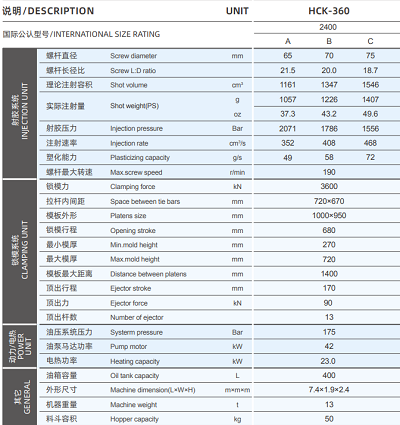
Injection molding machine tonnage calculation formula
The calculation formula for injection molding machine tonnage (Tonnage) is usually:
Tonnage = (projected area) x (injection pressure) ÷ (safety factor)
Understand the basic concept of tonnage
Definition of tonnage: refers to the maximum clamping force of the injection molding machine (unit: tons), which is used to resist the pressure generated when the molten plastic is injected into the mold to prevent the mold from being stretched open.
Influencing factors
Machine part size, material properties, mold complexity, injection pressure, etc.
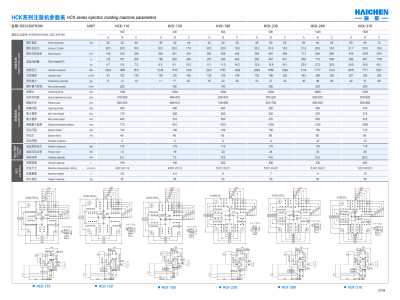
Key parameters Calculation Formula
Projected Area
Projected area refers to the total area of the mold cavity that contacts the plastic, usually measured in square inches (in²).
The maximum single-sided area of a part on the mold parting surface (including runner system).
- Calculation method
- Projected area = mold cavity length × mold cavity width
- Projected Area Unit
- quare inches (in²) or square centimeters (cm²).
- Projected area calculation method
- Regular shapes: length × width (rectangle) or π × radius² (circle).
- Irregular shapes: need to be simplified to 2D projection area.
- Projected area Key point
- Multi-cavity molds need to multiply by the number of cavities.
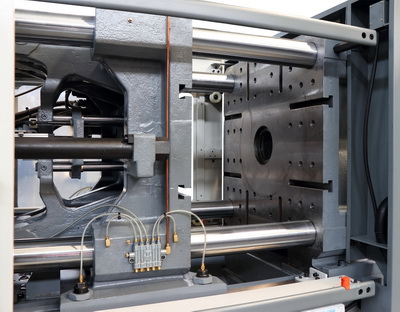
Injection Pressure
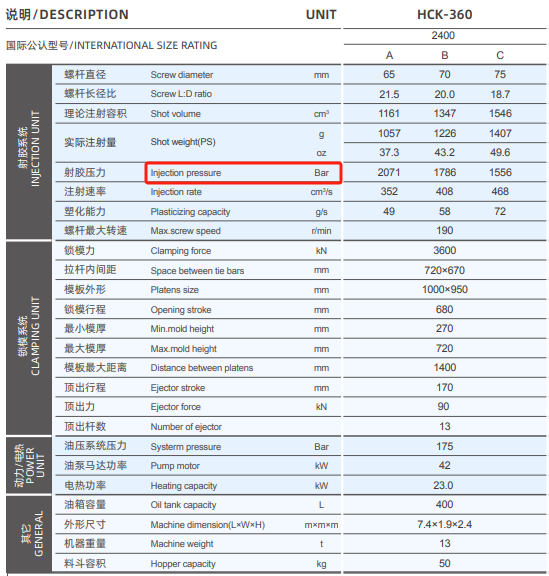
Injection pressure refers to the pressure applied by the injection unit to the mold during the injection molding process, usually measured in pounds per square inch (psi).
When different types of injection units (such as plunger and screw) have different recommended injection pressure ranges. For example, the recommended range for plunger type is 400-500 psi, and the recommended range for screw type is 250-350 psi.
- Injection Pressure Unit: Pounds per square inch (PSI) or megapascals (MPa).
- Typical values:
Common plastics: 1500–3500 PSI (approximately 10–24 MPa).
High viscosity materials (such as nylon): can be as high as 5000 PSI (34.5 MPa).
- Note: Material suppliers are required to provide specific pressure values
Safety Factor
The safety factor is used to ensure that the mold will not be damaged during production due to insufficient clamping force. Common safety factors range from 2.0 to 2.5.
The choice of safety factor depends on the design complexity of the mold, the melting characteristics of the material, and the requirements of the production environment.
- Safety Factor or Tonnage Factor Purpose: To offset process fluctuations and avoid flash or short shots.
- Value range:
Safety Factor: Usually 2–4.
Tonnage Factor: Usually 2–8 tons/square inch. - Recommendation: Take the upper limit for complex molds or high precision requirements
Calculation steps
The injection molding machine Tonnage Calculation Formula steps includes following four steps
- Determine the projected area
- Determine the injection pressure
- Apply a safety factor
- Verify the calculation
Determine the projected area
Measure the length and width of the mold cavity and calculate its total area.
If the mold has multiple cavities, you need to multiply the projected area by the number of cavities.
Determine the injection pressure
Select the appropriate injection pressure based on the mold material and design.
The injection pressure may be different for different materials. For example, hard plastics require higher injection pressure.
Apply a safety factor
Multiply the projected area by the injection pressure and divide by the safety factor.
Verify the calculation
Use the tonnage table provided by the injection molding machine manufacturer or consult an experienced engineer for verification.

Key influencing factors
Material properties
- High viscosity materials (such as ABS, nylon) require higher injection pressure and increased tonnage.
- When the melt flow rate (MFR) is low, the tonnage requirement is higher.
Mold design
- Multi-cavity mold: the projected area needs to be multiplied by the number of cavities.
- Complex structure (slide, core pulling): add 10–20% safety margin.
- Cold runner system: the runner projected area needs to be included.
Process parameters
- High mold temperature can reduce melt viscosity and reduce tonnage requirements.
- Excessive injection speed may cause pressure peaks, and the safety factor needs to be increased.
The calculation formula of injection molding machine tonnage is a formula that comprehensively considers the mold projection area, injection pressure and safety factor. By accurately calculating the tonnage, it can ensure that the mold remains stable during the production process and avoid product defects or mold damage caused by insufficient clamping force.