Injection molding screw barrel purchasing guide covers the following aspects:
- Screw Barrel core function
- material
- Screw Barrel structural parameters
- Mainstream brands
- Price
When purchasing screws, it is necessary to take into account that different application scenarios require different types of screws.
First of all, it is because different types of plastic materials have different physical and chemical properties.
Therefore, different materials require different processing methods.
In addition, the structural parameters of the screw are also very important, such as the length-to-diameter ratio, compression ratio, and the proportion of each section’s length, etc.
In addition to considering these basic performances, when choosing a screw merchant.
It is necessary to pay attention to their qualifications and the quality of the screws.
For instance, Haichen Machinery and Haichen produce screws made of various steels.
They can add surface treatments to the screw, such as gas or nitrogen ions, or hard chromium plates.
To provide additional surface protection and increase the service life of the screw.
Definition and core function of injection molding screw barrel
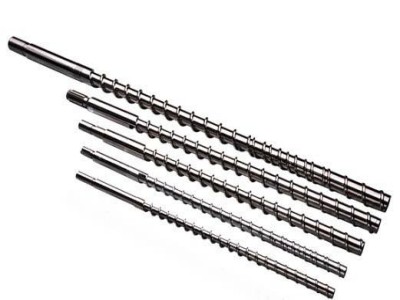
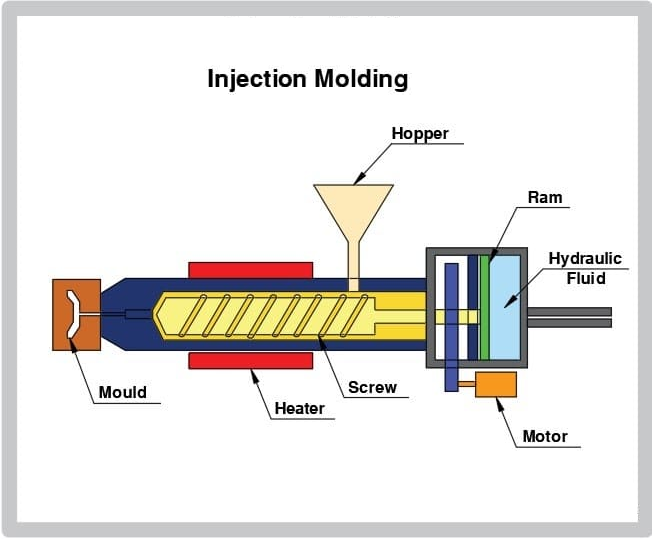
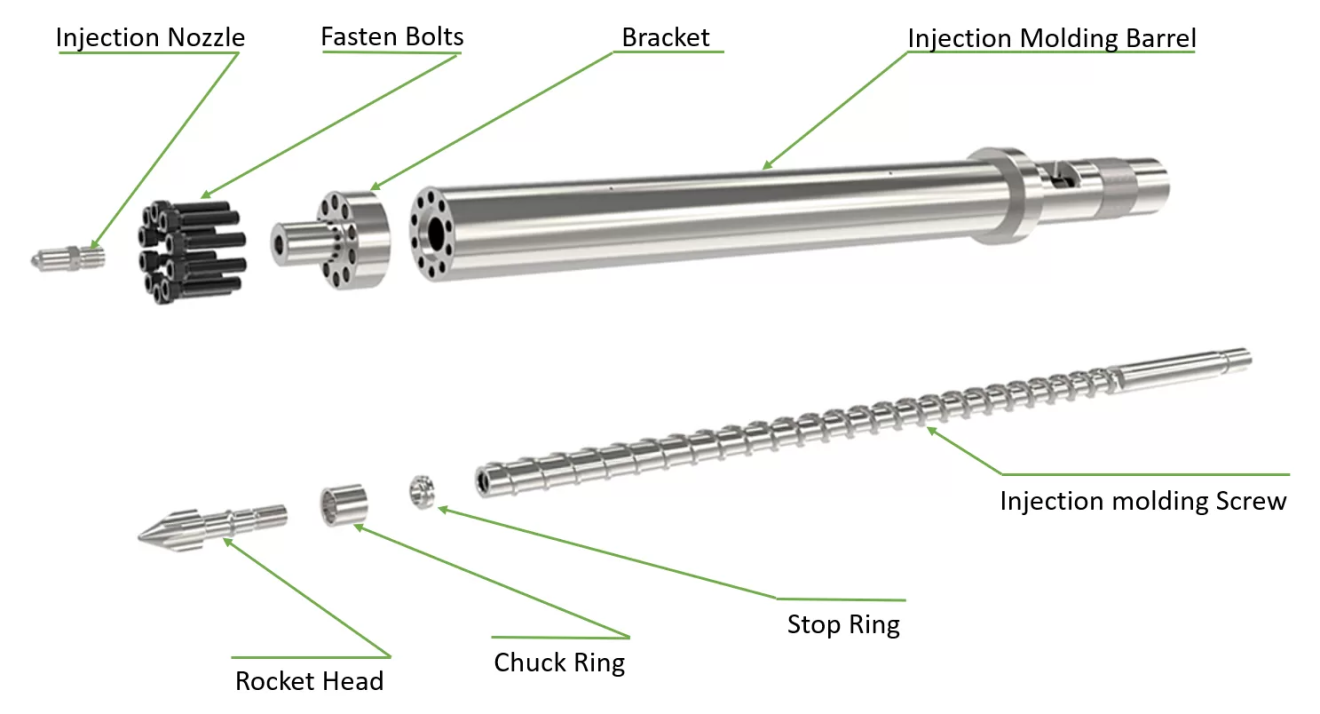
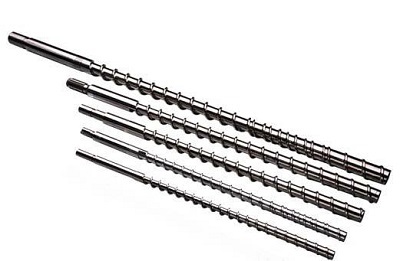
The injection molding screw barrel is the core component of the injection molding machine.
Which is composed of a screw and a barrel, and undertakes the functions of conveying, compacting, melting, mixing and pressurizing plastics.
Its working principle is based on the rotational movement of the screw inside the barrel.
Which melts the plastic particles into a homogeneous viscous fluid through frictional heat and external heating, and finally injects it into the mold for molding.
Injection molding screw barrel material selection
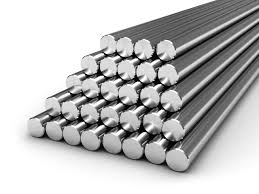
Nitriding steel (e.g. 38CrMoAl)
High surface hardness (HV950-1100), wear resistance and corrosion resistance, suitable for general plastics (e.g. ABS, PP).
Bialloys (e.g. 34CrAINi)
Better wear resistance, suitable for high-wear scenarios such as glass fiber reinforced materials.
Stainless steel or chrome plating
For transparent products or acidic plastics (e.g. PVC), it is necessary to avoid peeling of the plating.
Barrel material
It needs to be matched with the screw, and the imported alloy steel (such as CrMoV9) is suitable for scenarios with high precision requirements.
Injection molding screw barrel dimensions and structural parameters
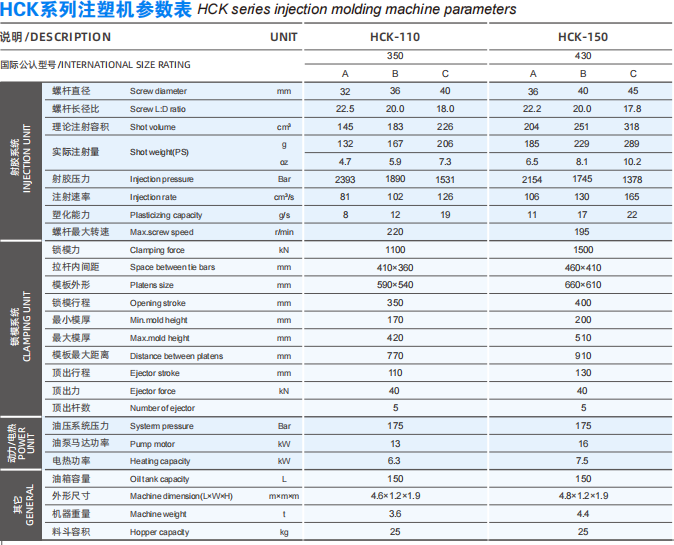
Screw diameter (D)
Directly affect the injection volume, which is proportional to the theoretical injection volume.
And needs to be matched according to the clamping force (such as 250T-3200T).
L/D ratio
20:1~25:1 is common, the larger the L/D ratio, the stronger the plasticizing capacity, but the energy consumption increases.
Pitch and groove depth
The smaller the pitch, the better the plasticizing effect, but the yield is reduced.
The groove depth of the feed section needs to balance the conveying efficiency and the strength of the screw.
Hardness and wear resistance
The depth of the nitriding layer needs to be ≥0.5mm, and the hardness of the alloy layer is HRC60-72.
Surface treatment
The thickness of the chrome plating layer is 0.025~0.10mm, which can reduce stickiness and corrosion.
Accuracy requirements
Straightness error ≤0.015mm/m, surface roughness Ra≤0.4μm, to ensure plasticizing uniformity.
Price and price-performance analysis
Price range Economy (nitriding steel)
50mm diameter screw barrel about $700-$2000, suitable for general plastics.
High-end type (double alloy)
The price of φ100mm or more can reach $4000-$10000, and the service life is extended by 3-5 times.
Customized products
special materials (e.g. high-speed tool steel) or complex structures (e.g. barrier screws) with a premium of 30%-50%.
Cost-effective considerations
Short-term production
Choose the nitride steel basic model, which is low cost but requires regular maintenance.
Long-term high load
Invest in double alloy screws to reduce the frequency of downtime and replacement, and lower overall costs.
Mainstream brands
Domestic brand
Haitian/HAITIAN
Provide a full range of double alloy screw barrels, suitable for clamping force 68T-3000T, cost-effective, suitable for small and medium-sized injection molding plants.
CHEN HSONG
Ai series nitriding screws have high wear resistance and support customized design, which is suitable for engineering plastics processing.
YIZUMI
The bialloy barrel has excellent high temperature resistance and is suitable for glass fiber reinforced materials.
International brands
FANUC
The screw for PC has high precision, and the chrome plating treatment is suitable for optical grade products.
Sumitomo/Sumitomo
Nitride steel screws are highly corrosion-resistant and suitable for high-precision medical tubing production.
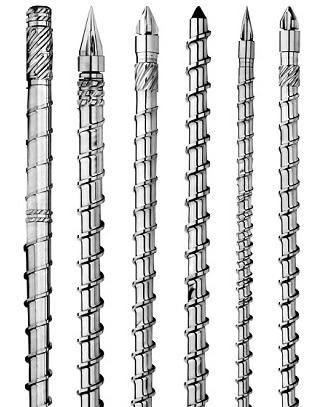
The type of screw that Haichen can provide
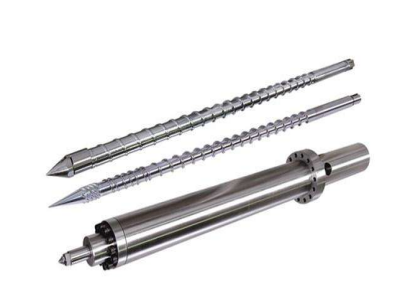
Imported high-alloy steel fully hardened screw
This screw can effectively withstand high temperature, high torque, high-pressure impact,
wear resistance, corrosion resistance, and smooth surface without pores to reduce surface adhesion and degradation.
Screws made of this material are suitable for applications that require high wear and corrosion resistance.
Stainless steel or double alloy nickel-plated screws
Screws made of this material are suitable for the addition of toner to plastics and need to be customized to strengthen the color-mixing type screw.
UPVC special screw
In view of the characteristics of high viscosity, easy decomposition, strong corrosiveness,
and good plasticization of PVC pipe joints, this kind of screw has good plasticization, less shear heat, and acid corrosion resistance.
PC special screw
For PC and other high-viscosity plastics, less shear heat, acid corrosion resistance,
medium and small diameter, molding PC, PP-R, flame retardant ABS, and other effects are good.
The use of different screws is to optimize equipment performance, improve processing efficiency, and meet specific process requirements.
This diverse selection enables screws to play a critical role in various industrial applications.