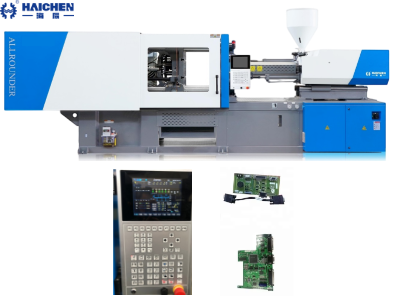
PLC applications in injection molding includes control injection molding process parameters, automated and optimized production process and so on.
In injection molding, programmable logic controllers streamline the regulation of process parameters, automate sequence control, and fine-tune production workflows. By serving as the central nervous system of today’s molding machines, the PLC governs variables like injection speed, heating zone temperature, and cooling time. It integrates operator panels for intuitive interaction and accommodates additional modules for further functionality. As a result, the system achieves tighter process windows, enhanced energy consumption, and extended component life—all while smoothing maintenance tasks.
The principal advantage of PLCs in molding lies in their ability to maintain repeatable production runs and uniform part characteristics. By simultaneously adjusting temperature, pressure, velocity, position, and dwell time, the controller executes coordinated corrections across elements. Multi-mode operation permits quick shifts between production recipes, while real-time adaptive tuning compensates for material variability. Together, these strategies minimize scrap and cycle time. Essential modules like PID control, variable frequency drives, and operator prompts are seamlessly integrated to curb reliance on manual oversight, thus lowering labor and repair costs while boosting throughput and quality.
PLC (Programmable Logic Controller) widely uses in injection molding, mainly in the following aspects:
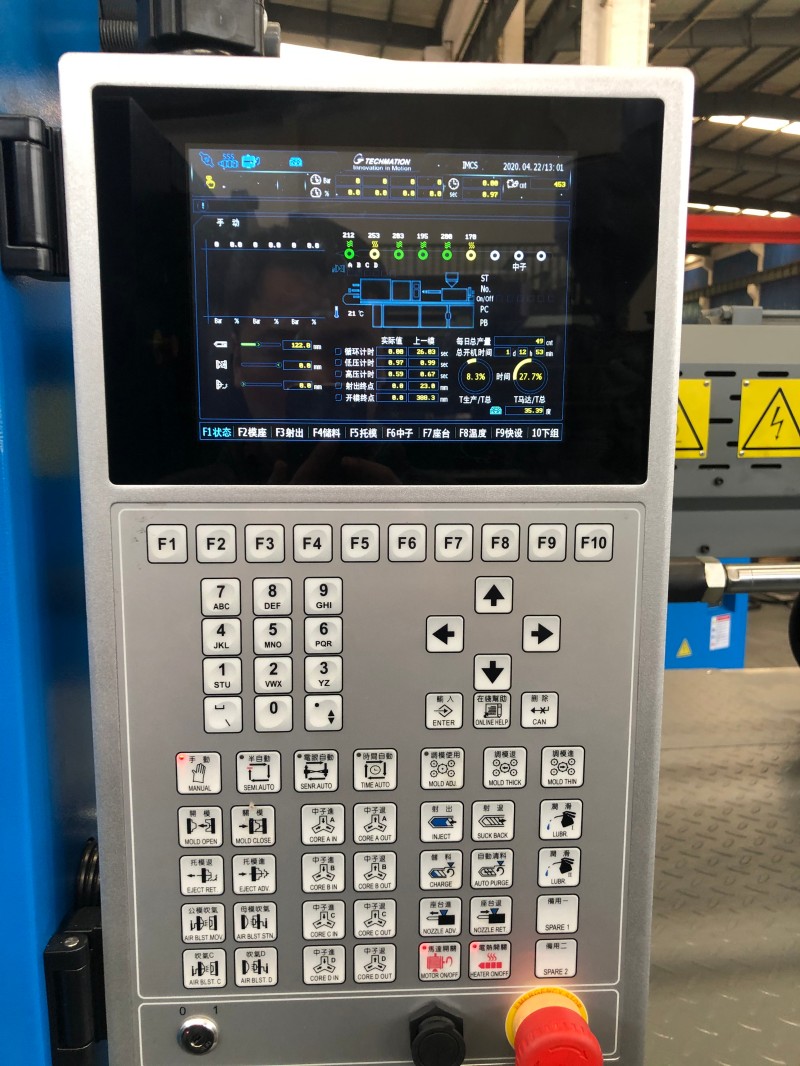
Control various parameters of the injection molding process
PLC can accurately control key parameters in the injection molding process, including temperature, pressure, injection speed and holding time. Precise control of these parameters is essential to improving product quality and consistency. For example, PLC can adjust the temperature of the mold and molten plastic to ensure that it remains stable within the target range, thereby reducing defects and improving production efficiency.
Core control parameters
PLC, as the “brain” of the injection molding machine, mainly controls the following key parameters:
Temperature control
- Precise control of melt temperature, barrel temperature, and mold temperature to ensure material fluidity and molding quality.
- PID algorithm (proportional-integral-differential control) is used to achieve closed-loop regulation. For example, the PLC dynamically adjusts the heater power through temperature sensor feedback data.
Pressure and speed control
- Real-time adjustment of injection pressure, holding pressure, and injection speed affects material filling and product density.
- Combined with hydraulic/electric system or inverter, the valve opening or motor speed is adjusted through PLC output instructions.
Position and time control
- Precisely control the mold closing/opening position, ejection stroke, and injection stage switching point.
- Set the duration of each step (such as holding time, cooling time) to ensure a stable molding cycle.
Control mode and function
Multi-mode operation
- Manual mode: Manually adjust parameters (such as pressure, speed, time) step by step.
- Semi-automatic mode: Pause after a single cycle and need to be restarted manually.
- Fully automatic mode: PLC runs continuously according to the preset program without intervention.
Greatly improve efficiency Adaptive and optimized control
- Real-time monitoring of sensor data (pressure, temperature, etc.), automatic correction of deviations through a closed-loop system.
- Combined with simulation software or experimental design, optimize parameter combinations to reduce defects (such as warpage, shrinkage marks).
Automatic mold adjustment
PLC analyzes the mold closing state and dynamically adjusts the position of the movable mold to ensure the clamping force accuracy
To avoid product flash or damage.
Automated and optimized production process
PLC realizes the automated operation of the injection molding machine through programming, including the opening and closing of the mold, injection, cooling and other steps. This automation not only improves production efficiency, but also reduces manual intervention and reduces production costs. In addition, PLC can also be flexibly adjusted according to different product and material specifications to meet various production needs.
Human-machine Interface
The touch screen displays real-time data and fault information, and the operator can adjust parameters intuitively.
Cooperative Control Extension
- The integrated frequency converter (FC) optimizes the speed of the hydraulic pump to achieve energy saving and precise matching of pressure/speed.
- Connect to the cloud platform or computer to remotely monitor and archive production data.
Reliability and Maintenance
- Replace traditional relay control, reduce line failures, and reduce maintenance burden.
- Standardized procedures adapt to multi-variety production and improve equipment flexibility.
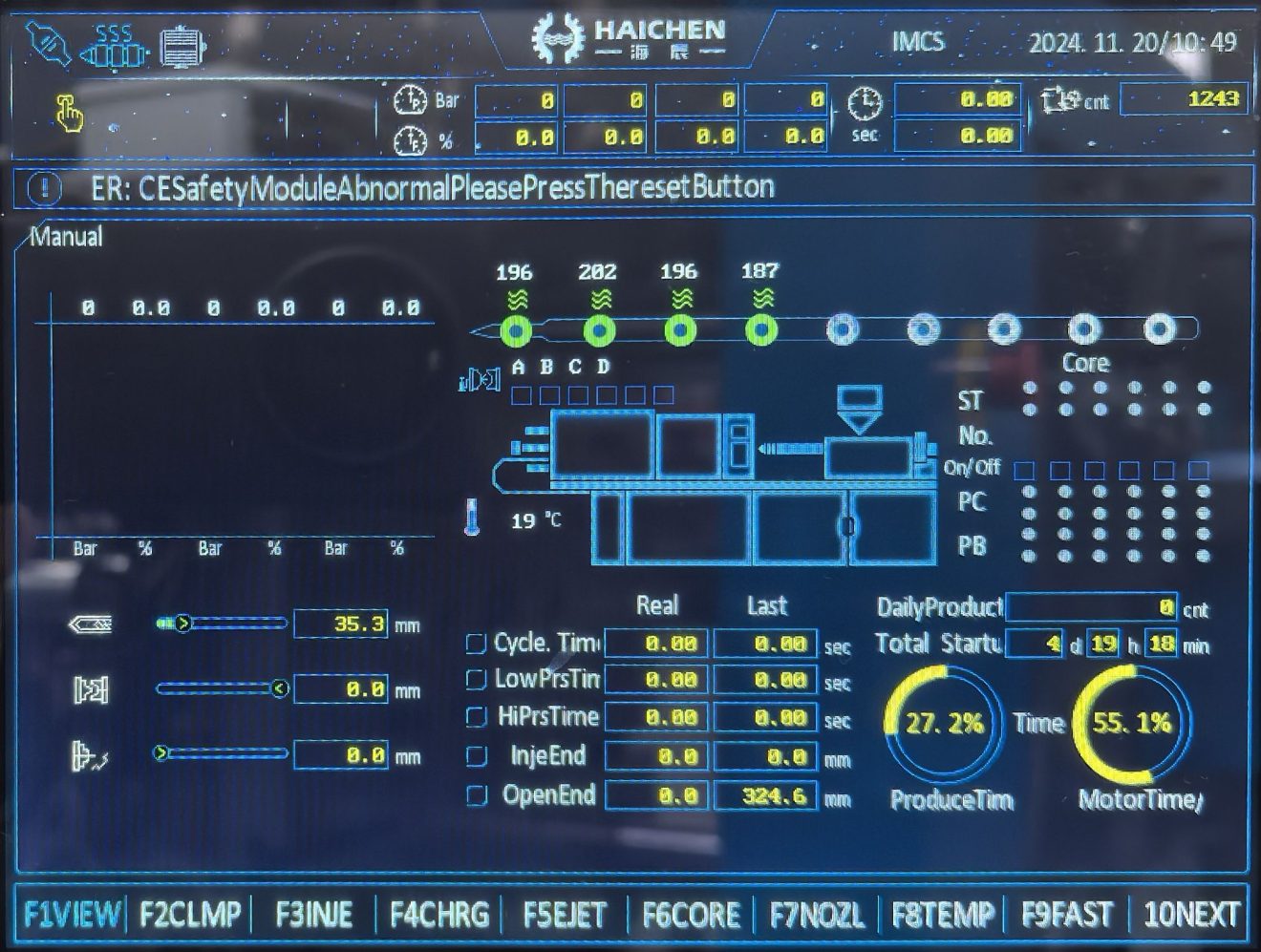
Fault diagnosis and alarm function
PLC has a fault diagnosis function that can monitor the operating status of the injection molding machine in real time and trigger an alarm mechanism when a problem occurs. Through the human-machine interface (HMI), operators can quickly locate problems and take measures to reduce downtime and improve production efficiency.
Real-time monitoring and fault diagnosis
PLC combined with configuration software can monitor the production process and equipment status of the injection molding machine in real time, realize fault diagnosis and remote monitoring. The system has verified its high efficiency through optimization and performance testing, can quickly respond to faults and improve equipment utilization
The core control process of the injection molding machine (mold closing, injection, pressure holding, ejection, etc.) is managed by the PLC program, and the fault is analyzed by analyzing the I/O status, alarm code and working principle.
Intelligent alarm function
The alarm program of PLC needs to consider the logical relationship of faults. Complex systems can combine auxiliary variables or PLC alarm text tools (such as TEXTMANAGER of Siemens 802 system) to achieve accurate alarms
Specific case: In the oil injection process of the internal mixer, the PLC program sets the “maximum oil injection time” reset and “oil injection timeout blocking” functions to automatically trigger the alarm to prevent faults caused by insufficient oil pressure or pipeline blockage.
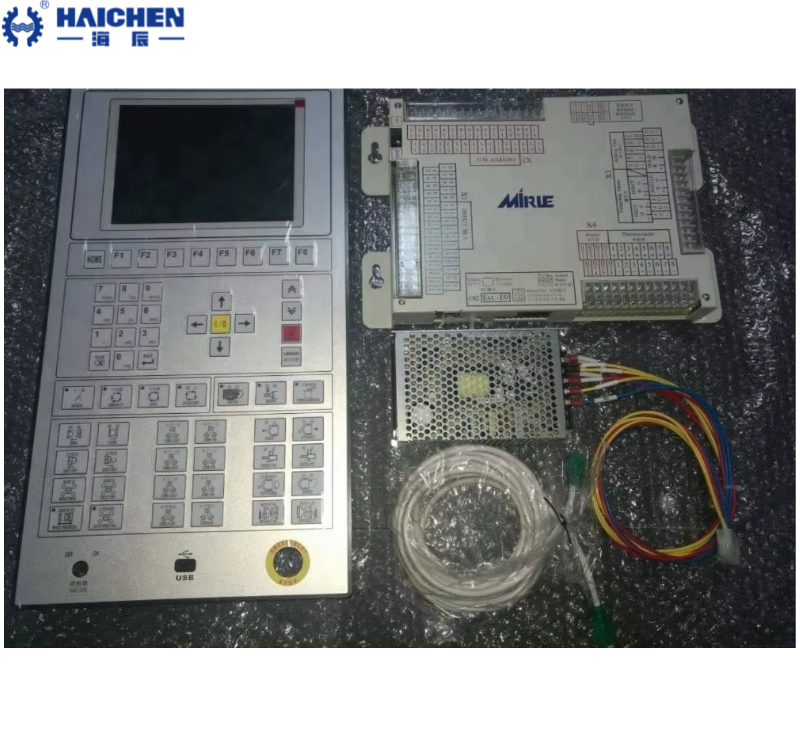
Data recording and analysis
PLC can record various data during the injection molding process, such as temperature, pressure, speed, etc., and analyze them. These data can help manufacturers optimize production processes, improve product quality, and provide a basis for subsequent improvements.
PLC system supports manual
The PLC system supports manual, semi-automatic and fully automatic modes, covering the entire injection molding process control. By optimizing control parameters (such as temperature and pressure), the product defect rate is reduced and maintenance is simplified.
Multi-mode control and preventive maintenance
Regularly checking the status of buttons, connecting cables and PLC hardware can prevent failures. The diagnostic function of PLC is divided into hardware logic diagnosis and software internal/external diagnosis, which directly affects the maintenance efficiency.
Integration with other systems
PLCs can be integrated with other systems such as sensors, hydraulic systems, and user interfaces to achieve more complex control tasks. For example, by working with temperature sensors, PLCs can automatically adjust the output of heating and cooling systems to keep the temperature of the mold and molten plastic within the target range.
Machine learning and visual inspection
Combine the improved VGG16 model and machine vision to achieve automatic classification and diagnosis of injection defects (flash, short shot, etc.), and promote intelligent fault diagnosis.
Statistical model and case reasoning
Based on principal component analysis (MPCA) and case reasoning (CBR) methods, reduce false alarm rate and improve fault type identification accuracy
Improve precision and consistency
In precision injection molding, the application of PLC can significantly improve the dimensional accuracy and consistency of the product. By precisely controlling the injection speed, holding time and pressure, PLC ensures that the plastic can evenly fill the mold and avoid defects. This is especially important for injection molding in fields such as medical devices and automotive parts that require high precision.
Multi-stage process coordination
PLC decomposes the injection molding process into stages such as mold closing, injection, pressure holding, cooling, and mold opening, and performs millisecond-level timing control for each stage:
- PLC’s fast scanning capability (<1ms) ensures seamless connection between mold opening and closing and injection action, avoiding flash or short shots.
- The inverter coordination solution can dynamically adjust the flow of the hydraulic system, reducing energy consumption by 15% while improving movement stability.
Energy Efficiency and Cost Savings
Modern injection molding machine designs focus on energy efficiency, and PLC plays an important role in this.
By optimizing production processes and reducing energy waste, PLC helps manufacturers reduce operating costs and reduce environmental impact.
The application of PLC in injection molding not only improves production efficiency and product quality, but also reduces manual intervention and production costs through automation and optimized control. With the advancement of technology, the application of PLC in the field of injection molding will become more extensive and intelligent.