Tie bar distance specifications in injection molding includes calculate and select, influence factors, practical application notes, etc.
The tie bar distance is a decisive parameter for the compatibility of injection molding machines and molds. Its reasonable selection directly affects production feasibility, cost-effectiveness and finished product quality. When selecting, it is necessary to strictly match the mold size and reserve a safety margin, while paying attention to machine calibration and maintenance to ensure stability.
The core of the selection of tie rod spacing is mold size + safety margin, which needs to be combined with clamping force, installation method and equipment type. First calculate the minimum spacing requirement based on mold specifications, then match the equipment parameters, and reserve dynamic operation space.
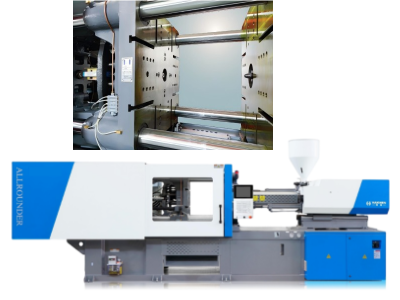
In injection molding, what is tie bar distance?
The tie bar distance is one of the key parameters that determine mold installation and processing quality. Tie bar distance usually refers to the distance between tie bars in the horizontal and vertical directions of the injection molding machine. This parameter directly affects the maximum size of the mold and the choice of machine.
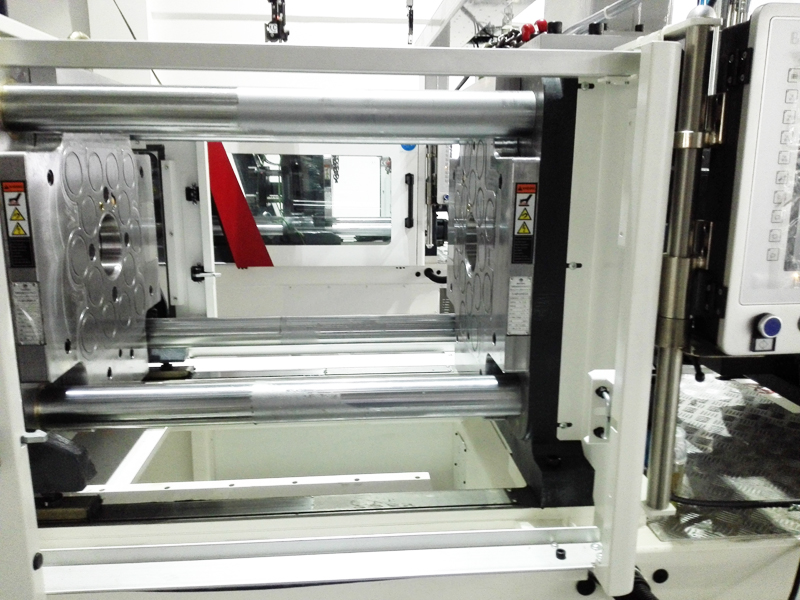
Definition and Importance
Tie bar spacing refers to the distance between the centers of adjacent tie bars in the horizontal and vertical directions of the injection molding machine. It determines the maximum size of the mold. Because the mold must be installed between the tie bars and cannot exceed the range of the machine template. The size of the tie bar spacing is directly related to whether the width and length of the mold can adapt to the machine.
Definition of tie bar distance specifications in injection molding
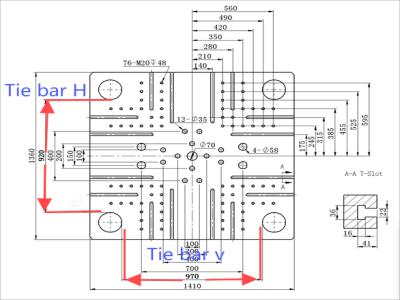
Tie Bar Distance refers to the horizontal (width) and vertical (height) distance between the four tie bars of an injection molding machine, usually expressed as X and Y.
And it is specifically divided into two measurement methods:
- Center distance: the distance between the center points of adjacent tie bars.
- Inner distance: the net space between the inner sides of the tie bars.
Importance of tie bar distance specifications in injection molding
Mold size compatibility
- Limited mold maximum size: The width and height of the mold must be less than the tie rod spacing, otherwise it cannot be installed.
- Installation safety margin:
Small mold: reserve ≥25 mm on each side.
Large mold: reserve ≥50 mm on each side to avoid deformation caused by mold hitting the tie rod
Matching principle
- Spacing too small → cannot accommodate large molds, limiting the production of large parts or multi-cavity molds.
- Spacing too large → waste of resources (such as electricity, space), increasing costs.
Machine structure and stability, rigid support
The tie rod provides structural rigidity to ensure uniform force on the mold during clamping.
Tie bar distance specifications in injection molding Calculation and selection
The width of the mold should be less than half of the horizontal tie rod spacing. Also the length of the mold should be less than half of the vertical tie rod spacing. For example, if the tie rod spacing of the injection molding machine is 500 mm × 400 mm. Then, the maximum width of the mold should not exceed 250 mm and the maximum length should not exceed 200 mm.
Relationship with clamping force (tonnage)
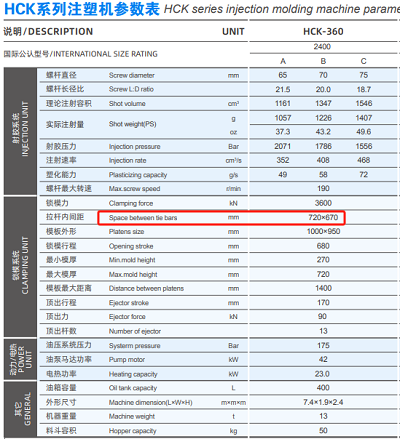
The tie bar spacing increases with the clamping force (tonnage) of the injection molding machine, and large machines can accommodate larger molds.
For example: for a machine with a clamping force of 980 kN, the tie bar spacing is 460 mm × 420 mm; for a machine with a clamping force of 1960 kN, the spacing increases to 560 mm × 560 mm.
Other key parameters are selected in coordination
- Mold thickness range: must match the minimum/maximum mold thickness of the injection molding machine (e.g. 250–550 mm).
- Ejector system: check whether the ejector stroke and ejector force meet the mold requirements.
- Mold size: The mold area limits the molding area, while the tie rod spacing limits the mold installation size. Both must be met.
Calculation and selection steps
- Determine the mold size: measure the mold width, height and thickness.
- Reserve a safe gap: reserve 25-50 mm margin according to the mold size.
- Match the clamping force: select the tonnage according to the product requirements, and refer to the model parameter table for the corresponding tie rod spacing.
- Check the matching parameters: confirm whether the mold thickness, ejection stroke, etc. meet the equipment range.
- Handling special needs: If the mold size exceeds the limit, consider a tie rod-free model or a customized solution.
Influencing factors
The specifications of the tie bar distance of the injection molding machine are affected by many factors, which are directly related to mold design, equipment selection and production process.
Mold size limitations
The tie rod spacing determines the maximum size of the mold that can be installed. The width and height of the mold must be smaller than the horizontal/vertical spacing of the tie rods, and a safety margin must be reserved:
- Small molds require at least 25mm clearance on each side (50mm total).
- Large molds require 50mm clearance on each side (100mm total) to avoid installation collisions.
The mold length and width must be smaller than the tie rod spacing, otherwise it cannot be hoisted into the machine through rotation
Mold weight
It also need consider the weight of the mold. To ensure that the machine will not be damaged during installation.
Machine type
Different types of injection molding machines (such as mechanical clamping, hydraulic clamping, and tie-bar-free clamping) have different requirements for tie-bar spacing.
For example, mechanical clamping is suitable for low tonnage requirements, while hydraulic clamping provides higher flexibility and clamping force.
Process quality requirements
- Clamping force uniformity: Insufficient tie rod rigidity will lead to uneven distribution of clamping force, causing mold deformation or flash.
- Multi-cavity mold: Due to its large size, a larger tie rod spacing is required.
Above all, tie bar spacing is a critical parameter in injection molding, and its specification directly affects mold design and machine selection. In actual operation, it should be considered comprehensively according to mold size, machine type and production requirements to ensure efficient production and avoid potential problems.