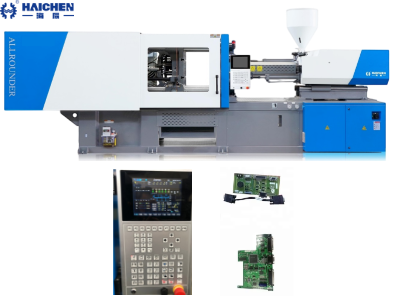
Types of limit switches in injection molding mainly includes like micro limit switches, roller limit switch, thermoplastic limit switches and others.
To above topic, the SL and Thinswitch series are relevant to our discussion. They come in standard, high-temperature, and liquid-resistant variants. Their primary functions are position verification and safety protection. While choosing a limit switch, factors such as installation space, environment conditions like temperature and liquid exposure, and application requirements such as ejector stroke control should be taken into account.
In an injection molding process, the limit switch plays a critical role in maintaining safety, accuracy, and automating the mold movement during production. Based on the information that I have gathered, the following are the main types of limit switches used in injection molding.
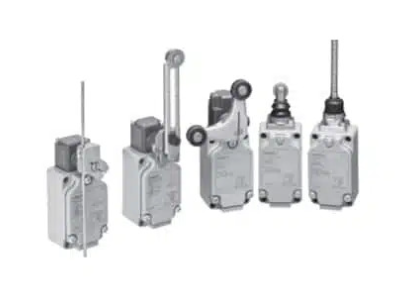
Types of limit switches in injection molding
Micro limit switches
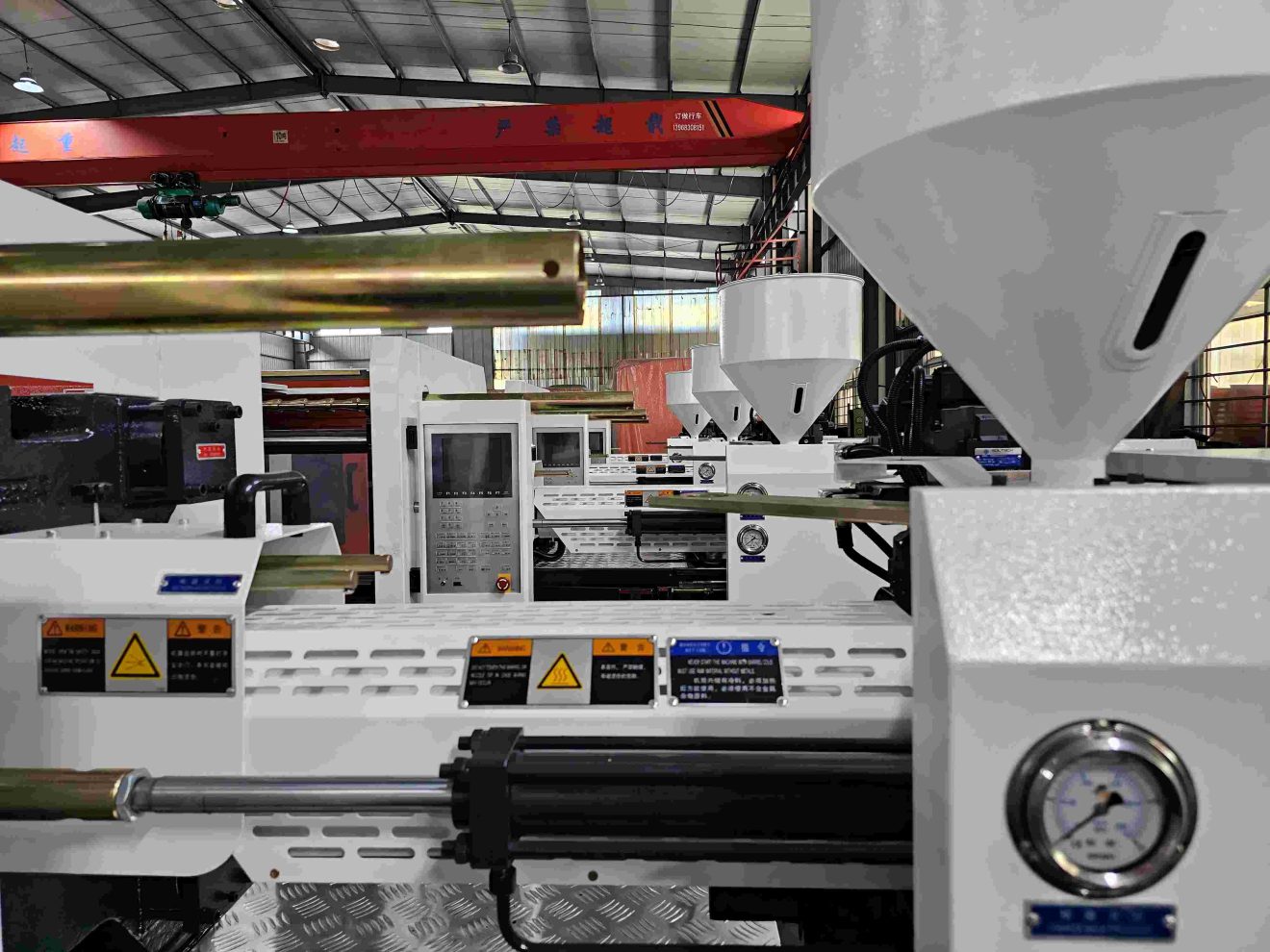
Micro limit switches widely use in ejection plates, stripper plates and side shift mechanisms of injection molding machines.
Features include long mechanical life (e.g. 500,000 or 100,000 times), long electrical life (e.g. 300,000 or 100,000 times), wide operating temperature range (-15°C to +125°C), high protection level (e.g. IP20 to IP40) and strong impact resistance (e.g. 2.5kV impact withstand voltage).
These switches are usually plastic or metal housings, with compact design and high reliability, suitable for a variety of industrial environments.
Definition
A miniature limit switch (also known as a micro switch) is a compact version of a standard limit switch, designed specifically for control circuits. Its miniaturization makes it suitable for use in confined spaces, such as the mold area of an injection molding machine.
Key Features
- Operational Principle: A short-stroke trigger plunger (usually located at the top) actuates a spring-loaded mechanism, resulting in rapid switching of the contacts (“momentary action”). A small displacement changes the contact state.
- Electrical Parameters: Typical ratings are 250V AC, 10-15A (standard micro switch) or 1-7A (ultra-miniature switch).
- Durability: High mechanical strength, shock load absorption, and dust and oil resistance.
- Lifespan: Some models have passed 10 million cycle reliability testing.
Key Application Scenarios
- Position Verification: Ensures the ejector plate is fully returned to its original position before closing the mold.
- Stroke Limitation: Controls the range of motion of the robot arm or moving parts.
- Environmental Adaptability: Stable operation in oily, dusty, or high-humidity environments (depending on IP rating).
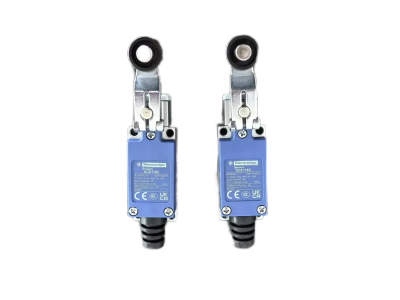
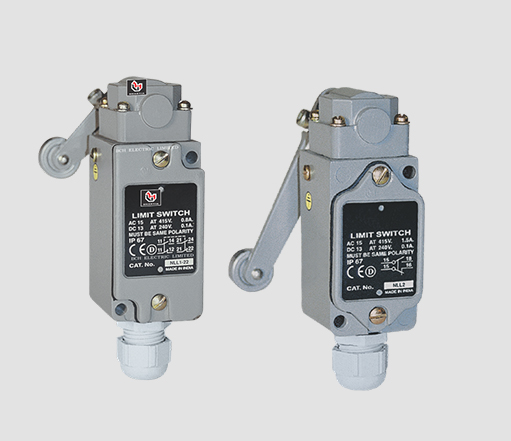
Roller limit switch
Definition
The roller limit switch is a common mechanical switch, suitable for injection molding machine stroke detection, door limit and safety protection. It is characterized by simple operation, easy installation, and the ability to withstand large mechanical loads and repeated actions.
Standard Roller Lever
- Features: A roller is mounted on the end of the lever, triggering the switch through radial motion. The roller design reduces friction and effort, while an internal spring mechanism ensures the lever returns to its original position when no external force is applied.
- Applications: Widely used in industrial equipment (such as injection molding machines and conveyor belts) to detect the position of rotating or reciprocating components.
Adjustable Roller Lever
- Features: This standard roller lever adds height adjustment, allowing the roller to be adjusted (typically from 2mm to 6cm). This makes it suitable for applications where parts are prone to wear or slight position shifts.
- Application: Detecting ejector plate resetting in injection molding machines and adjusting for displacement caused by mechanical tolerances or wear.
Roller Plunger
- Features: A roller integrated into the plunger head converts radial motion into linear actuation, combining the advantages of low friction and precise actuation.
- Application: Suitable for vertical or horizontal pressing applications in space-constrained environments, such as safety interlock systems for injection molding machines.
A core function in injection molding machines
- Safety control: Verifies ejector plate reset to prevent accidental mold closing and damage to the mold.
- Position detection: Monitors mechanical motion boundaries (e.g., injection stroke, conveyor position).
- Durability requirements: Must withstand high-frequency operation.
Thermoplastic limit switches
This type of switch is made of thermoplastic material. Which can meet the UL-94 VO standard, also has high fire resistance and impact resistance. And it is suitable for use in high temperature environments.
Thermoplastic Limit Switches (Exhibit 6)
- Model: TSA012 Thermoplastic Roller Lever Plunger Limit Switches.
- Features:Actuator constructed of thermoplastic materials (such as nylon or stainless steel).
- IP66 protection rating, high-temperature resistance, water and dust resistance, suitable for harsh environments.
Thinswitch® Series Limit Switches
(Designed for Injection Molding Machines)
Function: Verifies that the ejector plate is fully returned to its original position, preventing damage from accidental mold closure.
- Standard models: resistant to 80°C (176°F), suitable for general environments.
- High-temperature models, such as the HT-291-LR, are resistant to 121°C (250°F) and suitable for high-temperature environments (such as thermoplastic processing).
Travel switch
It uses to detect the moving position of molds or mechanical parts to ensure that they stop or start at a specific position.
Plunger Type
Principle: External force directly acts on the plunger, triggering the contacts.
Sealing Method: O-ring or rubber diaphragm seal (Type A), or fully sealed design (Type B).
Injection Molding Applications: Type B offers better sealing, but must be protected from damage from thermal cutting debris.
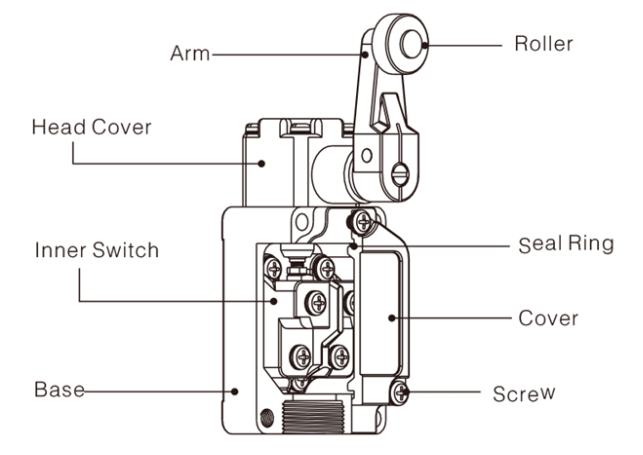
Roller Lever Type
Principle: When impacted, the roller drives the lever, which, through a cam, pushes the impact block to quickly trigger the contacts.
Reset Mechanism: Single-roller types automatically reset, while dual-roller types require manual reset.
Applications: Position detection of moving parts in injection molding machines (e.g., ejector plate stroke control).
Hinge Lever Type
Features: The lever can be adjusted to accommodate different impact directions.
Applications: Complex mechanical structures requiring multi-directional triggering.
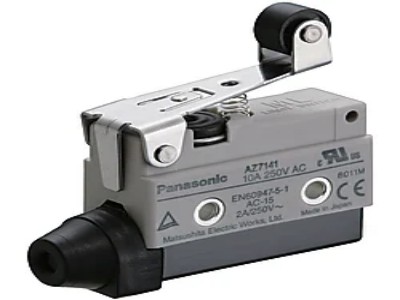
There are many types of limit switches use in injection molding. Including micro-type, roller type, thermoplastic, waterproof type, travel switch, special function switch and micro switch, etc. Each type designs for specific industrial needs. And moreover, application scenarios to meet the use requirements of different molds and injection molding machines. The common characteristics of these switches are high reliability, long life and strong adaptability, which can effectively ensure the stability and safety of the injection molding process.