The tolerance for injection molding is usually±0.1mm. It is the standard tolerance range and is suitable for most common parts.
Injection molding tolerance refers to the allowable deviation range of part dimensions during the injection molding process. These injection molding tolerances are usually determined by factors such as mold design, material properties, processing conditions, and part geometry. The tolerance range for injection molding usually depends on factors such as part design, material selection, mold design, and manufacturing process.
Tight tolerances (±0.002 inches/±0.051 mm) and ultra-tight tolerances (±0.001 inches/±0.025 mm) are high-precision standards for injection molding, but they are difficult and costly to achieve. Successful application requires a combination of material selection, DFM design, precision molds, and process control. If not necessary (such as non-matching surfaces), it is recommended to use a more economical typical tolerance (±0.005 inches) to balance cost and performance.
The tolerances for injection molding can range from ±0.1 mm to ±0.025 mm, depending on the requirements of the part and manufacturing conditions. Optimizing tolerances requires comprehensive consideration of multiple factors such as design, materials, molds and process, and finding a balance between cost and precision.
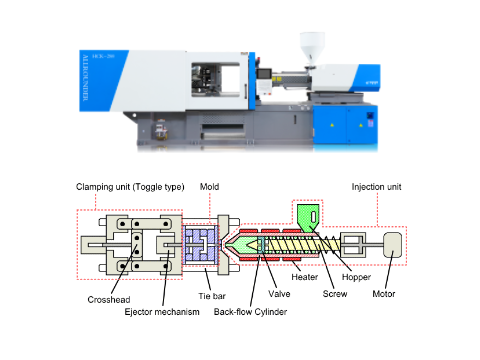
Injection molding tolerance
Typical tolerance range of injection molding tolerance
Common range
- Standard tolerances are typically ±0.100 mm to ±0.500 mm.
- Conventional injection molding tolerances are ±0.500 mm (approximately ±0.020 inches), and consumer products often use ±0.100 mm. The typical value is ±0.100 mm, and high-precision scenarios can reach ±0.025 mm.
- Size influence: The larger the part, the looser the tolerance. For example:MT1 tolerance (high precision):≤3 mm size: ±0.050 mm
120–140 mm size: ±0.180 mm
High precision range
- Strict tolerances can reach ±0.025 mm, but the cost increases significantly.
- Precision fields such as medical require ±0.025 mm, and the mold needs to be processed to ±0.0254 mm.
Mold processing tolerance
The CNC processing tolerance of the mold is usually ±0.127 mm (±0.005 inches), and high-precision molds can reach ±0.0508 mm (±0.002 inches) or lower.
Shrinkage effect
Material shrinkage causes dimensional deviations, and the typical shrinkage tolerance is ±0.050 mm/mm (±0.002 inches/inch). For example:A 100 mm ABS part has a ±0.500 mm deviation due to shrinkage.
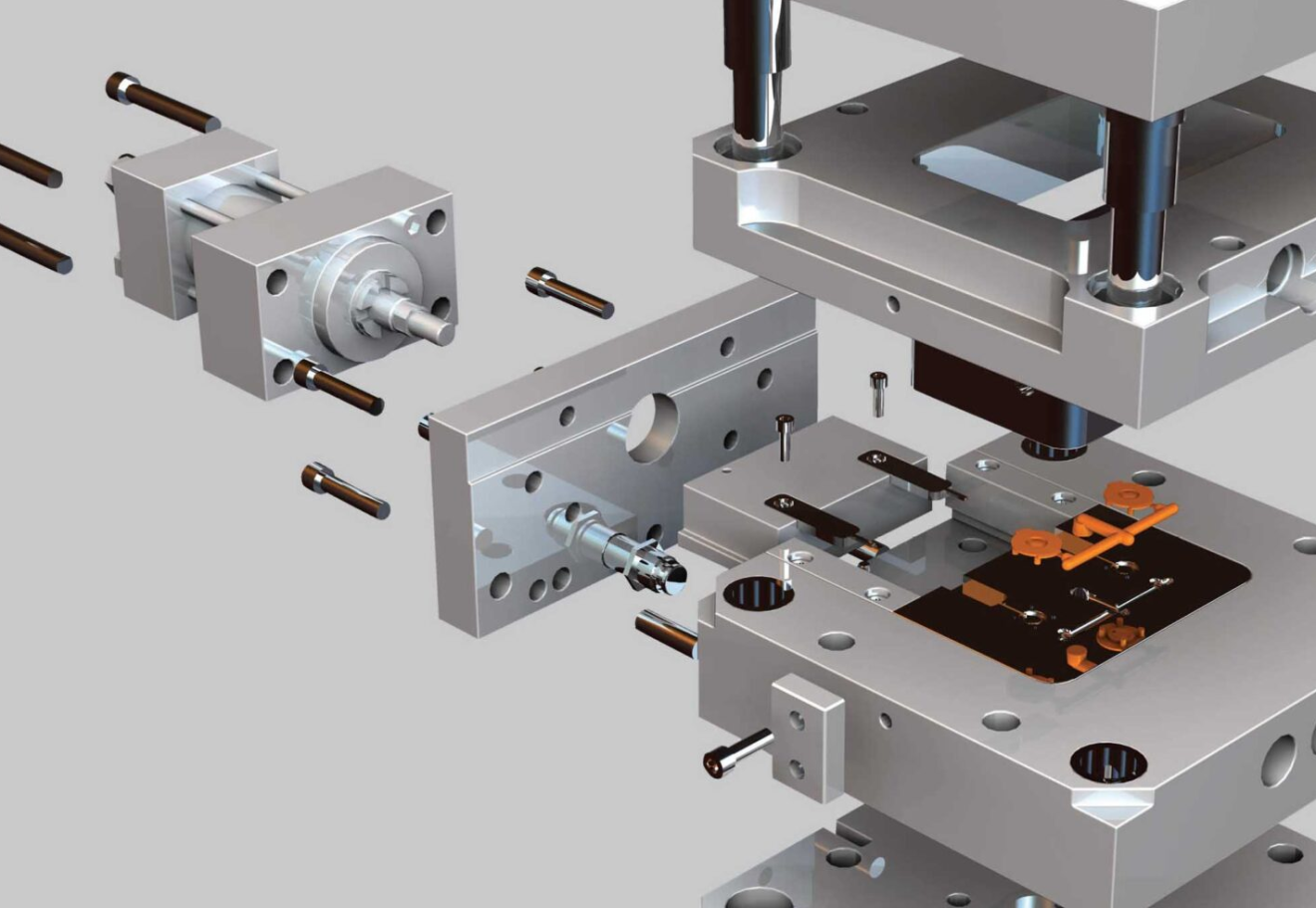
Tight tolerances and very tight tolerances of injection molding tolerance
Tight tolerance injection molding refers to the process of injection molding, which achieves high precision and consistency in part size by precisely controlling mold design, material selection, process parameters, and post-processing. This technology is widely used in fields that require strict dimensional control, such as aerospace, medical equipment, and the automotive industry.
Tight Tolerance
It usually refers to a dimensional deviation range of ±0.002 inches (approximately ±0.051 mm).
Some sources (such as) define it in millimeters as ±0.025 mm (close to ±0.002 inches).
Very Tight Tolerance
This refers to a dimensional deviation range of ±0.001 inches (approximately ±0.025 mm).
Furthermore, precision fields such as medical treatment may require mold processing accuracy of ±0.001 inches (±0.0254 mm)
Difficulties and cost impact
Technical challenges
- Mold complexity: Multi-cavity molds or complex geometries increase the difficulty of temperature control and lead to unstable shrinkage.
- Material properties: Semi-crystalline resins (such as PEEK) shrink more than amorphous resins, affecting tolerance stability.
- Part size: Large or thick-walled parts are more prone to deformation (such as warping) and difficult to maintain tight tolerances.
Rising costs
- Tight tolerances require high-precision molds (such as CNC machining ±0.0508 mm), strict temperature control, and additional cooling systems.
- Manufacturing costs are significantly higher than typical tolerances due to precision equipment, longer cycles, and material waste.
Optimization suggestions
Design stage
- Prioritize design for manufacturing (DFM): avoid unnecessary tight tolerances and simplify geometry.
- Choose low shrinkage materials (such as glass fiber reinforced resin) to reduce deformation.
- Specify tight tolerances for critical mating dimensions (such as hole positions) and relax non-critical dimensions.
Process control
- The mold requires a uniform cooling system, especially for multi-cavity molds.
- Small batch production can be combined with secondary processing (such as drilling) to improve accuracy.
Collaborative verification
Designers work with manufacturers to predict shrinkage through mold flow analysis (Mold Flow Analysis).
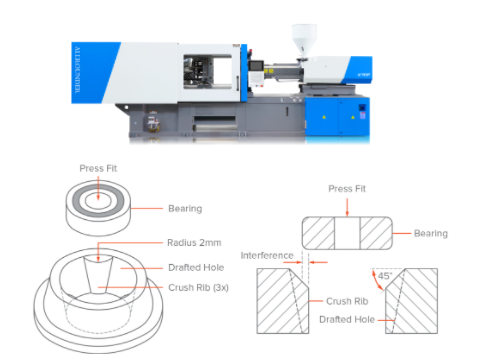
Injection molding tolerance: Factors affecting tolerance
Material selection
The shrinkage rate of different materials will affect tolerances. For example, the shrinkage rate of ABS materials may lead to larger size changes.
Design Features
The design complexity of a part (such as thin walls or complex geometry) can affect tolerances.
Mold design
The precision and manufacturing quality of the mold directly affect the tolerances of the parts.
Manufacturing process: Process parameters such as injection pressure, cooling time and mold temperature will also affect tolerances.
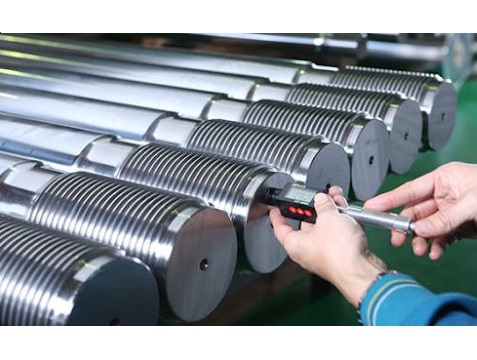
Methods to optimize tolerances
Design Manufacturing (DFM)
Consider manufacturing feasibility during the design phase, optimize part size and shape to reduce tolerance requirements.
Material selection
Select the right material to reduce shrinkage and improve dimensional stability.
Mold design
Use high-precision CNC machining technology and optimize mold design for stricter tolerances.
Process Control
Improve tolerance accuracy through repeated process control and optimization of injection parameters such as pressure, temperature and cooling time.
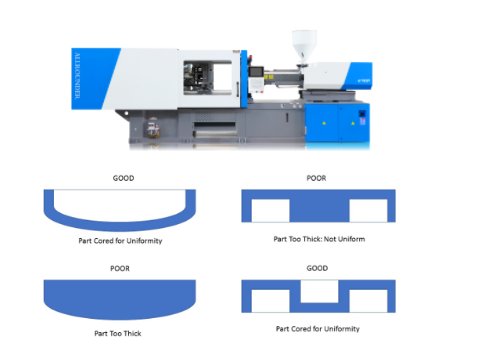
Key influencing factors
Material properties
The shrinkage rates of different resins/metals vary significantly
Part size
Large-sized parts have looser tolerances.
Mold design
Parting lines, gate locations, etc. affect accuracy.
Post-processing
Small batch production can improve accuracy through CNC processing.
Cost trade-off
Every level of tolerance increase will significantly increase costs.