PLA (polylactic acid) is widely used in 3D printing mainly for the following reasons:
- Low melting point and ease of processing
- Good mechanical properties
- Diverse physical forms
- Environmental & Sustainability Advantages
- Cost-effective and mature supply chain
PLA is one of the most widely used materials in 3D printing, especially by those who are just beginning in the 3D industry.
It is very easy to print with it.
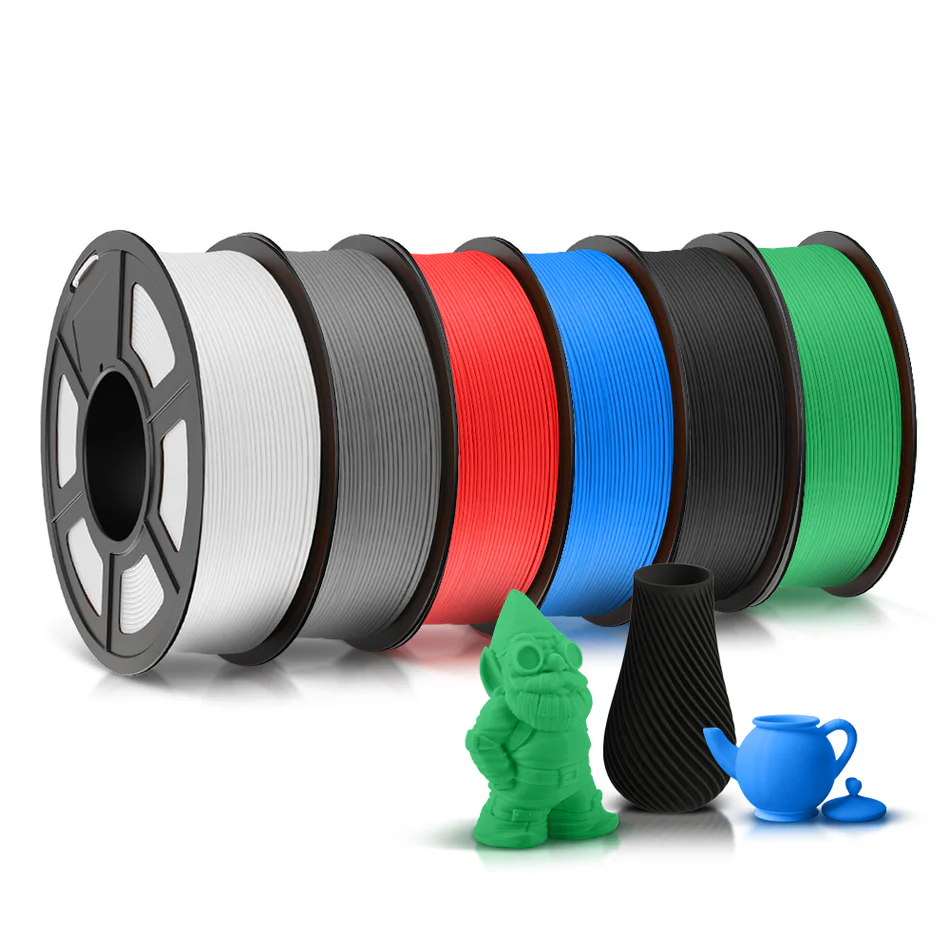
It can generally be found in filament form, but also in pellet or granule form.
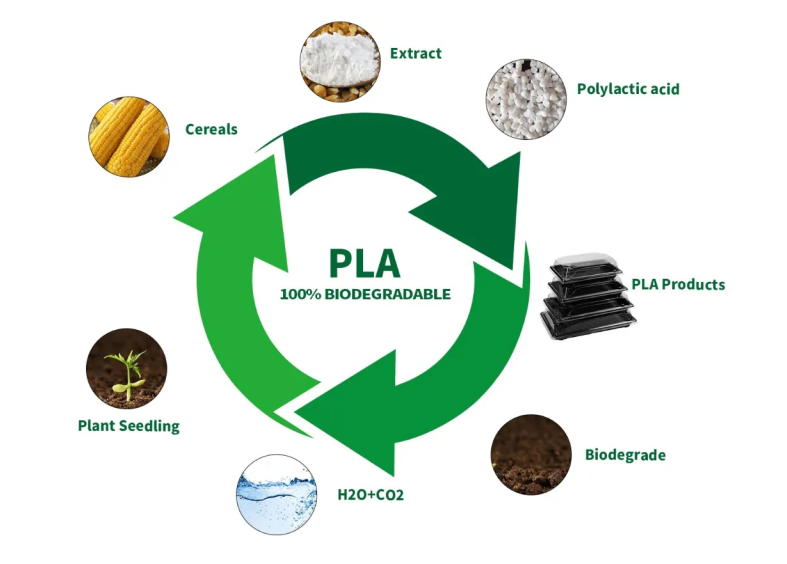
PLA materials
Polylactic acid is a biodegradable material made from renewable plant resources.
Such as corn starch, sugar cane, etc, through a fermentation and purification process.
Its basic composition is lactic acid (2-hydroxypropionic acid).
Which can be obtained from plants such as corn, sugar beet, and sugar cane by fermentation, and then produced by ring-opening polymerization reaction.
PLA is an aliphatic polyester with good mechanical properties, transparency, and gloss, as well as biodegradability.
It can be completely decomposed into carbon dioxide and water under natural conditions and will not cause pollution to the environment.
The chemical formula of PLA is (C3H4O2)n, the melting point is between 157 °C and 200 °C, and it has high strength and rigidity.
The basic unit of PLA is L-lactic acid or D-lactic acid, two isomers that can be formed by ring-opening polymerization.
Pure L-lactic acid or D-lactic acid mixture is the basic raw material for the preparation of PLA.
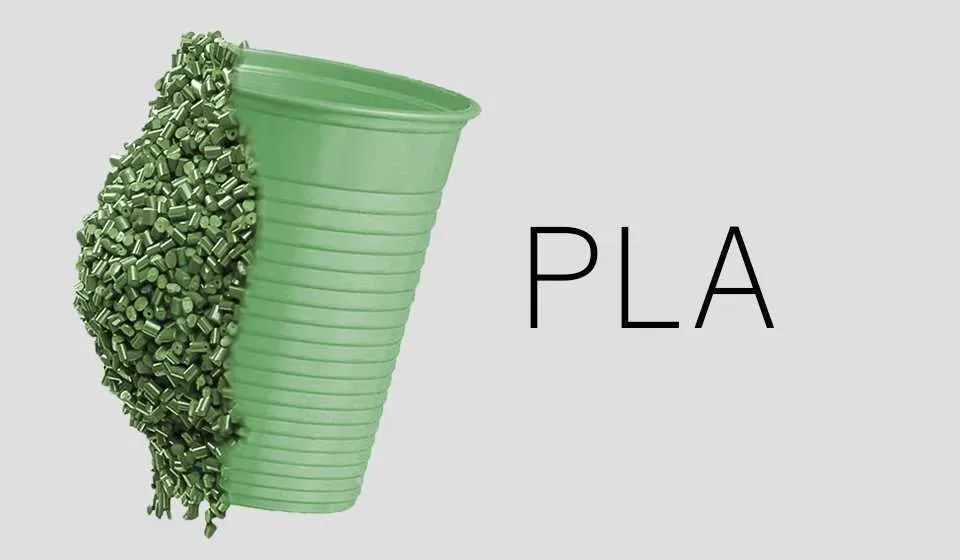
Physical and chemical properties of PLA
- Low melting point and ease of processing
- Good mechanical properties
- Diverse physical forms
Low melting point and ease of processing
The melting point of PLA can print at a temperature range of 170-220°C.
Which is significantly lower than ABS (typically 230-260°C) or nylon (240-260°C).
This feature makes it suitable for most consumer-grade 3D printers.
Without the need for high-temperature nozzles or heated beds, this reduces equipment costs and technical barriers.
Good mechanical properties
Tensile strength
60-65 MPa, sufficient to support the needs of prototypes, models, and low-load components.
Surface quality
High gloss and transparency (some models), smooth surface of the printed product, suitable for display applications.
Low shrinkage
The shrinkage rate is lower than that of ABS when cooling.
Which reduces the risk of warpage and improves the success rate of printing.
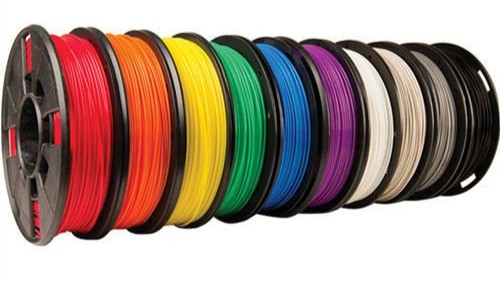
Diverse physical forms
PLA can be modified to achieve characteristics such as flexibility, high impact resistance, or high temperature resistance.
This expands the application scenarios.
For example, carbon fiber-reinforced PLA improves strength and heat resistance.
Environmental & Sustainability Advantages
Biodegradable PLA is derived from renewable resources such as corn and sugarcane.
And can be decomposed into CO₂ and water under industrial composting conditions, reducing plastic pollution.
Although specific conditions are required for actual degradation.
Its eco-label still drives policy support and consumer preference.
Green production process
Compared with petroleum-based plastics (such as ABS).
PLA production energy consumption is reduced by 65%, and greenhouse gas emissions are reduced by 68%.
This is in line with the global carbon reduction trend.
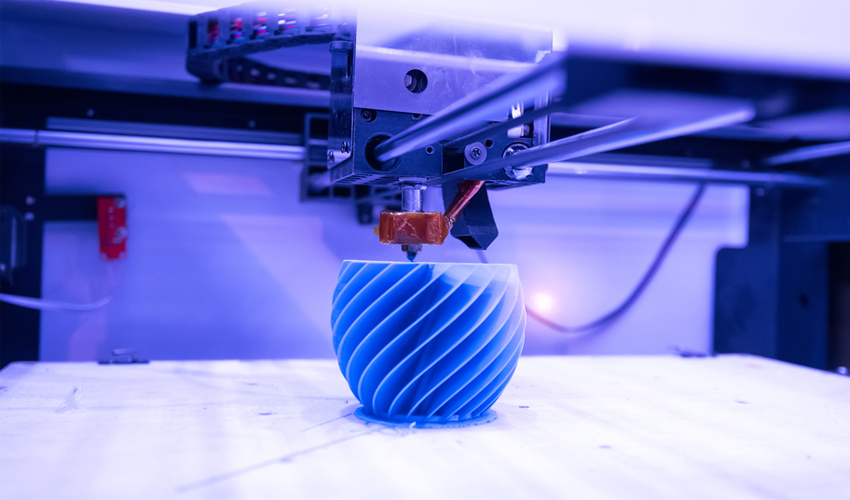
Safe and non-toxic PLA is FDA certified for food contact and medical devices, such as disposable tableware, pharmaceutical packaging.
Cost-effective and mature supply chain
- Low material costs-PLA for 3D printing
- Low post-processing requirements
Low material costs-PLA for 3D printing
PLA is usually cheaper than engineering plastics such as ABS and nylon, and does not require special equipment.
Making it suitable for education, individual users, and low-volume production.
In recent years, breakthroughs in the preparation technology of lactide (a key raw material for PLA) have reduced the cost of the industrial chain.
And the expansion of production capacity in China and other countries has further driven down prices.
Low post-processing requirements
PLA prints typically eliminate the need for complex post-processing, such as acetone polishing, saving time and resources.
Applications of PLA in 3D Printing
As outlined above, PLA is a relatively accessible plastic that is easy to use in 3D printing, especially among makers.
But that is not to say it only has advantages.
Its properties result in fragile printed parts that are not very strong, as well as sensitive to sunlight and high temperatures.
This is why it is used primarily by beginners, especially for creating decorative elements, gadgets, and toys.
However, PLA is not limited to the world of makers.
Many industries also use this thermoplastic for prototyping.
For example, this saves companies a lot of money, instead of going through the process of creating molds.
Also, although it’s not the first option people turn to, industries such as automotive can also benefit from PLA filament.
In this case, it can be useful for creating accessories for cars or even for certain elements of the dashboard.